March 5, 2022

The Patient Doctor

I haven't written anything on this blog in years. There are two reasons for this. Reason 1 is because I went to medical school and then became a (busy) doctor. Reason 2 is because I've been working on a book about getting cancer and then becoming a doctor. 

I've never stopped thinking about all this cancer stuff - it was time to get it all down on paper once and for all, especially because going to medical school wasn't the solution I thought it would be. 

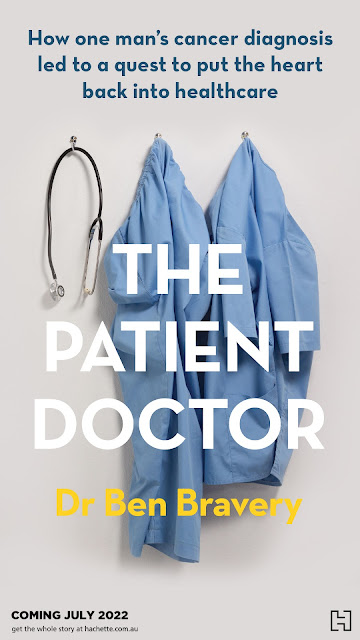
I've called the memoir The Patient Doctor and it will be published in July 2022. According to the publisher: "Now, driven by his experience on both sides of the healthcare system, this patient-turned-doctor gives a no-holds-barred account of how he overcame the trauma of his illness to study medicine and shares what he believes student doctors, doctors, patients and their families need to do to ensure that the medical system puts the patient at the very heart of healthcare every day.

Honest, powerful, eye-opening and sometimes heart-wrenchingly funny, this is an inspiring memoir that shows that no matter our situation we all need to be treated with care and compassion, right until the very end." 

The book is available for pre-order now, and I can now share the cover!


May 6, 2017

Cartoon journey

To accompany the Science Friction episode about the kinds of things people weigh up when making medical treatment decisions, Humyara Mahbub and Olivia Willis worked with my words and came up with this beautiful comic about my cancer love story.


July 31, 2016

Guilt of all kinds

As I've written in my post Three Years, one of the hardest aspects of surviving cancer, for me, is leaving behind the people that don't.

So when Cancer Council NSW approached me to speak in a webinar on survivors' guilt I didn't hesitate. Survivors' guilt in people living with cancer is being increasingly recognised by doctors and researchers and it's an important issue.

A couple of days before the webinar, The Huffington Post interviewed me and made this:

How A Cancer-Free Diagnosis Can Trigger Survivors' Guilt

July 7, 2016

Five years: The waiting room

Waiting rooms in cancer hospitals are strange places. We patients sit side-by-side during these deeply private moments, stripped to our underwear, wearing gowns that never conceal enough flesh, mostly in silence.

It’s never clear whether people want to talk, or what emotional confrontation is playing out in that intimate space behind their eyes.

So as you wait, you wonder. What does he have? Why does she look so sad? What happened to their leg?

When our names are called, we complete our scan and return for observation. Those faces and bodies are gone, replaced by different silent people.

At my most recent scan, I only talked to one other patient. The older man with silver hair and soft features rejected Hello!, OK and Marie Claire, and settled on Australian Geographic. I was reading the only other Australian Geographic magazine, and this meant we had things we could talk about.

He had been diagnosed with prostate cancer seven years earlier, and had his prostate and its cancer successfully removed. Last month a routine blood test showed the cancer was back and a scan revealed secondary tumours in his spine and hip. He had just finished a fancy radiation treatment that fired ultra-thin beams of energy specifically at these small tumours. He was having a scan today to see if the radiation had worked.

Early diagnosis. Successful surgery. No cancer, for over seven years.

That’s seven years of normal birthdays, playing with grandchildren, loving his wife, getting annoyed at the weather, groaning about bills – all the normal things that aren’t cancer. And then more cancer.

The medical student in me asked him about the onset of aches or pains in his cancer-riddled bones, and how the tumour markers in his blood had responded to treatment.

The cancer patient in me asked him what it felt like to have cancer again, how he had spent the seven years without cancer, and how he had managed to put it out of his mind and get on with things.

For me, that last question was the most important.

The more time I spend living with ‘no evidence of disease’, the easier it gets. I am safer, statistically, the further I get from my diagnosis, and that brings me comfort. But in the days before this check-up I started to feel something new: a fear of how radically altered my life would be if cancer returned.

Each step closer to physical and psychological normality means you have further to fall should the cancer ever come back. It’s a strange limbo between illness and wellness. The running track towards the healthier and happier version of yourself sometimes evaporates, forcing you to stop and look back.

The distance from the cancer is both reassuring and frightening, but also an illusion. It is reassuring because time and distance mean progress. It is frightening because the thought of ending up back there is almost overwhelming. And it feels illusory because there is no real distance at all, my body is still my body and any residual cancer remains inside it.

September 5, 2015

Coffee and cancer, a translation

Image: Izabela Latak
During cancer treatment I started drinking coffee, through my mouth. That’s an important distinction in the cancer world because many people with cancer consume coffee through another hole in their body – the bum (more on that in a moment).

Once someone gets cancer they develop a radar for things that will help them stay alive. Some of these things come from doctors and some from family and friends, but the bulk of Things That Will Save You come from people who have written popular books, blogs or invented diets and ‘cancer-busting’ treatments.

Coffee is one of the most commonly suggested and debated of the Things That Will Save You. Cancer doctors don’t have much to say about coffee, but the complementary and alternative medicine field is full of ways to use coffee – one of which is pouring warm black coffee into your bottom, holding it there for a little while and then letting it drain into the toilet.

There is no evidence that drinking coffee through your bum has any effect on cancer. But there is evidence that drinking coffee through your mouth may.

A study recently made headlines when it found that drinking (through the mouth) four cups of coffee (or more) per day can drastically reduce the chances of colorectal cancer coming back. People that drank this amount of coffee were also less likely to die from their cancer.

The curse of having studied science before cancer and now studying medicine after cancer means I can’t just go with the news headline, dress like George Clooney and buy a Nespresso – I need to look at the details.

If this study was about eating 2 bananas a day, or sipping a shot of apple cider vinegar each morning, I probably wouldn’t bother – but 4 cups of coffee per day is a serious commitment and if I am going to expose my brain and heart to that amount of caffeine I need to understand the benefits.

So, for those of you that avoid dense scientific studies, here’s a translation on what you need to know. 


The journal: Journal of Clinical Oncology. This is a good journal which only publishes the top 10% of papers sent to it.

The main author: Dr Charles Fuchs, Director of the Gastrointestinal Cancer Center at the Dana-Farber Cancer Institute.

Why study coffee and colorectal cancer?
Image: Daniel Schwen
The logic is:
A. Coffee protects against Type 2 Diabetes.
B. Type 2 Diabetes involves high sugar and high insulin in the blood.
C. Colorectal cancer likes high insulin and high sugar in the blood.
D. If coffee works against Type 2 Diabetes it may also work against colon cancer.

How was this study done? This study did not start off by looking at coffee. The researchers have pooled a previous big clinical trial that compared [5FU + leucovorin] with [5FU + leucovorin + irinotecan] in people with stage III colorectal cancer. Because there was no difference in the outcomes after either chemo the researchers are able to chuck both groups together into one big database and ask different questions about people with stage III colorectal. They are tracking the people from the original study over time, so they know when they die or get sick again.

How did they measure coffee? They gave people a survey about foods and eating patterns halfway through chemo and then 6 months after chemo was finished. They then tracked these people over time. The average time of tracking was 7 years.


What did they find? They compared the number of cups of coffee consumed each day and whether someone's cancer came back and whether they died from their cancer.

They analysed the data two ways. In the first way they looked at people who drank 0, <1, 1, 2-3 and 4 cups of coffee or tea per day and measured when their cancer came back or if they died from their cancer. This showed that ANY coffee helped, and people that drank 4 cups a day had the greatest chance of survival.

In the second way they grouped everyone into two groups (no coffee per day vs 2 or more cups per day). This also showed that all the people who drank 2 or more cups per day had a greater chance of survival.

Couldn't something else explain this? Yes, maybe. This is not a randomised controlled trial (the gold-standard in medical research) so it can't say that coffee is the reason those people lived longer and had less cancer recurrence. But, the authors did control for HEAPS of factors that they know affect colorectal cancer recurrence and survival (BMI, sugary drinks, age, gender, lymph node involvement, a Western diet, exercise, chemo and smoking).

Because the research took all these factors into consideration, they are able to say: When you compare two overweight smokers who drink a lot of Coke and don't exercise, the one that drinks coffee will have a lower chance of dying from their cancer. You could pick any of the factors they 'controlled for' and make similar comparisons.

Gimme the nutshell: The study has 1000 people in it with stage III colorectal cancer, but the numbers of people in each group of coffee drinkers are much smaller, and in the ‘4 cups per day group’ the total number of people is only 62. The protective effect of coffee is dose-dependent, which means any coffee is good and 4 or more per day is best. This is a correlation, not causation, and the authors admit there may be another factor responsible for the pattern they found. The pattern they found is a strong one though and the Journal of Clinical Oncology is a robust and well-respected journal.

In a New York Times blog about this study (the best reporting of the study that I found), the main author says that patients shouldn’t start drinking coffee because of his study, but, “If you’re a coffee drinker and enjoy it, stick with it”. For coffee-haters he suggests adopting Things That Will Save You where the evidence is clear-cut: “avoid obesity, exercise regularly and follow a balanced diet.”

What's going on with coffee? Science doesn't know yet. It could be that coffee makes cells in the body less sensitive to insulin. It could be that coffee works as an antioxidant. It could be that coffee is anti-inflammatory.

Where was tea in all of this? They didn't classify types of tea consumption - just herbal and non-herbal. No mention of green tea. This is the US and I suspect tea is not as common a part of their diet as it is in ours.

Is it coffee or caffeine that is important? The decaf coffee consumed by the cancer survivors in this study had no effect on survival. Only actual coffee did.

So, my thoughts after reading this are that I like coffee and will keep drinking it. If I didn’t drink coffee and wanted to start I would print off the study (or at least the abstract) and take it in to the next appointment with my GP or oncologist and get their opinion.

May 7, 2015

Fear and alternative medicine

Soon after my cancer diagnosis I told my surgeon that I was uncomfortable about the upcoming surgery and did not want him to remove all my contaminated organs.
 
In a small, crowded clinical room I pleaded: “Can’t you just take the colon, or rectum and leave my bladder and reproductive organs alone? Can’t I just delay the surgery for now and spend the next six months working out, eating healthy, and meditating?”

I was diagnosed with stage three bowel cancer in 2011 at the age of 28. At the time I was terrified. I was facing chemo, radiation, and major surgery that could have left me, if I survived, with permanent bags hanging off my body and erectile dysfunction.

And so I launched head first into exploring other therapies. They gave me a sense of power over my body – like I could have an effect on the outcome of my cancer, and it wasn't in the hands of others alone.

My doctors didn't agree. At the meeting they warned me, unequivocally, that they don’t usually see people who have tried alternative methods – as promoted by the now disgraced Belle Gibson – “until they are crippled by pain and it’s too late to save them”.
 
With the recent passing of alternative therapy ‘Warrior’ Jessica Ainscough after a 7 year-long battle with epithelioid sarcoma, a rare cancer affecting the hands and arms, and the collapse of Gibson’s fake cancer healing empire, alternative medicines have been pushed into the public eye.

Exactly how many people turn down conventional treatments for alternative ones is unknown because hospitals don’t measure it. Hard data is also lacking because studies tend to group complementary and alternative therapies together – even though they represent very different attitudes towards mainstream medicine.

Most people believe that alternative therapies are safe, despite the fact that they aren’t subjected to rigorous analysis. The risks of alternative medicines are rarely communicated by those selling them, especially the biggest risk of all – missing that small window of opportunity to hit a cancer with the best treatment possible, usually aggressive chemo, radiation or surgery.

Wellness therapies don't work alone. But maybe we should also preach some patience and understanding to those who turn to them so we can support them to make decisions that ensure the best chance of surviving. I am a scientist yet – four years ago, faced with a life-threatening illness – I suddenly considered abandoning science. Why?

Quite simply, I was very scared.

In the end I followed my doctor’s treatment plan – but I also kept meditating, drinking apple cider vinegar, went vegan, and began to see complementary healers. Faced with fear and frustration, these more gentle treatments seemed a universe away from the sickness and pain of chemo and surgery. They gave me hope.
 
Why were people so duped by Belle Gibson’s lie? Why was Jessica Ainscough (who I met at a cancer meeting and was lovely) seen as so brave and all knowing? Both are a reminder that people are complicated, emotional creatures, especially in times of stress and fear. They want a bit of magic and a few miracles.

I started my training this year to be a doctor. And one of the most important lessons we learn as doctors is that people need to be emotionally propped up through major medical decisions. Support during the decision-making process, when dread and anxiety are elevated, is fundamental.

Gibson and Ainscough sold therapies that aren’t proven – but remember people believed in them because they were afraid. I know because I've been there and danced with the dangerous idea of abandoning medicine, at a time when I needed it most.
January 27, 2015

Next steps

I start medical school next week and my stethoscope arrived two Tuesdays ago. I bought it online.

I never thought that one day I would end up browsing online stethoscope stores. It didn't cross my mind, for example, while I was lying motionless under beams of radiation. And I certainly wasn't thinking about it while watching nurses change my bags of chemotherapy solution.

Was it before a particular surgery? Or after? Nah, I was definitely focused on other things then, like trying to eat without throwing up.

It’s a shame I can’t remember, it would be nice to have an ‘Ah-Ha’ point in time – the exact moment my motivation and values shifted and I decided I wanted a career in medicine.

Plenty of cancer survivors have gone into medicine or medical research. And plenty of doctors and health professionals have developed cancer. What I’m doing isn't anything new.

But I thought I would mention it here because this blog is about one person’s cancer journey, and that journey means I am now crossing the line between patient and doctor...and I am doing that because of cancer.

Next week I begin a new journey and dive head first into the system that saved me.


August 16, 2014

Three years

The worst thing about surviving cancer is not the scars, fuzzy fingers and feet, violent colon or fear that cancer will return. No, the worst thing about surviving cancer is knowing people who don't.

Since being diagnosed with cancer I have played a role in the cancer community. It's my way of giving back and I felt the pull early on. There's an important trade off though - being involved and around people with cancer means I meet and chat with people that may die from it (and I'm sure this crosses their minds too). Soon after treatment finished, some people even advised me to put some distance between myself and others with cancer. Their reasons were valid, they were worried about me and how I would respond, longer-term, to people dying from my disease.

I'm intimately aware that cancer kills, and each time I lose someone it's a reminder of how lucky I am (the further from treatment I get the more I surrender to the role of luck in surviving cancer). Each death is a reminder, a healthy reminder, that I am alive. Each passing fills me with gratitude that I knew that person and that I am alive to know more people (both with and without cancer). It's that simple.

That's not to say that each death isn't a sledgehammer of sadness. I cry when I learn about people I know that die from cancer. Each death forces me to (re)dwell on my own experience, survival and cancer journey. Why them? Why me? Why not me? I cry for them, me and everything that is crap about cancer. Questions and tears, off I go, round and round...

Like when the marine biologist in her late 20s passed away. Or the 30-something father of three who built a pizza oven for his kids in the backyard. Or the science grad in his early 20s who fit in one last trip overseas with his partner. Or the wine maker who blew some of her life insurance payout on a shopping spree in Singapore. Or the social worker searching for her father. Or the 20-something creative that touched a thousand lives and then some, but couldn't keep her own.

I cry for them all; I think that's healthy. And sometime later I smile. I smile because they were all awesome people and would be smiling too if they were here. I also smile because I'm alive, and that means I can still meet, learn from, and laugh with, even more people with cancer.


July 29, 2013

Two years

There is only one thing I like more than sipping champagne, and that’s sipping champagne while wearing a bow tie.

But a couple of weeks ago I found something I like better than that: sipping champagne while wearing a bow tie, on a stage in front of 500 people (half of whom also had bow ties on) and talking, about myself.

The occasion was the All Ribbons Ball – a charity gala organised by the Young Garvan Foundation to raise funds for medical research at the Garvan Institute.

That’s enough about things that aren't me, back to me.

I was the guest speaker, and my job was simple: communicate the need for medical research. Of course I jumped at the opportunity. First, because I like science; second, because I survived stage 3 colorectal cancer; third, medical research saved my life; and forth, I don’t mind talking about one, two and three.

And while I don’t believe in fate, I do enjoy basking in the awe that accompanies coincidence. And what a coincidence!? Exactly two years before my speech at the All Ribbons Ball, to the night, I was lying in hospital and getting ready for my first surgery.

The surgery would be massive, as indicated by the felt pen marks covering my abdomen telling the surgeon where to put my new bladder and bum.

I was nervous then, and I was nervous two years later, under different spotlights and advocating for more medical research.

But the nerves faded quickly. You could have heard a pin drop. I had the crowd in the palm of my hand (as speakers know, this is a rare and elegant thing) and I had a ball (pun intended).

I finished. The room stood. Neurotransmitters flooded the reward centre in my brain. And I left the stage, embraced my family and friends, and had another sip of champagne.

Everyone was smiling. My Mum cried. And the whole time I thought of people my age, with my cancer, that I’d met but would never see again.

Damn, survival is bittersweet.

(C) Naomi Hamilton

December 27, 2012

Death by Facebook

Having cancer a couple of decades ago, I can only assume, must have been a private affair. Not so today. Cancer is everywhere; it has infiltrated our lives by touching many of our elderly, and increasingly, our young and fit. It now permeates our supermarkets, where items with pink packaging promise a better future, and our magazines, where celebrities have photo shoots under headlines that read ‘I’ll beat this in 6 weeks!’.

And increasingly, Facebook and the Internet are being used to communicate cancer and share the ways it changes our bodies and brains. The digital age allows cancer to leave the hospital and the confines of the beds in which we lay healing. The image of chemotherapeutics entering our veins is no longer the domain of the privileged few that choose to sit by our sides while we bathe in these medicines – anyone and everyone can update their status, pin a picture or write a blog entry and tell whomever is listening what cancer is like.

I’m of a generation that uses social media – that odd extension of human sociality that promises hyper-connectedness, but most likely only strengthens the connection between users, touch screens and keyboards. I used Facebook during cancer as a way to direct people to this blog, as this blog is more about my cancer, and less about me; it is where Ben with cancer lives.

Other people do it differently

Some people fully merge their e-self with their cancer self, and this is commonly done on Facebook.

Through Facebook I have been able to connect with people my age, who have the same cancer as me, and get what it’s like to be me. It is an invaluable tool for people thousands of kilometres apart to meet and discuss all that cancer is and is not. Part way into my cancer journey, some of these people I’d met started dying and it struck me that Facebook means I can be privy to it all, right up until the last breath.

I’ve witnessed different ways of dying on Facebook

Some people log off early in their final struggle. The posts and photos quietly dry up, just as their motivation, and the relative importance of Facebook to their lives, must.

But some people communicate until very close to the very end. Posts of pain and pain relief, damaged tissues, loss of appetite, people that have let them down and people that have surprised them, what matters most and what matters least – it’s all there for people to see, comment on and Like.

A family member or close friend eventually takes over the account and posts on the cancer patient’s behalf, and your heart sinks because the shift in ownership reflects the larger shift in life force. And then the page becomes about other people and their grief, and then sometimes things get complicated and distorted when loved ones want to close the account and meet resistance from the masses.

I’m confused by Facebook and dying

I'm most confused about how these two forces – one modern, the other ancient – are merging in this age of ours. It’s probably too early to tell anyway.

It is interesting though, especially when support services for young adults with cancer aren't as prevalent as they are for other groups with cancer. And those that are available for us make no mention of what it may be like to watch your friends, and cancer colleagues, die online.

July 3, 2012

Recolonnected

Two months ago the section of small intestine poking out of my abdomen was pushed back inside and sealed in a way that meant that it was game time for my colon.

Even after explaining to people exactly what a stoma is and how the surgery to remove my tumour unfolded, and even after drawing diagrams on napkins and myself, I have the feeling that people still don't understand exactly what went on. 

When living with a loop ileostomy, as I did, nothing is turned off or stopped - things are just by-passed. The diagram to the right is one that best shows the surgical outcome. As you can see, everything is still connected and working. This cut section of small intestine is pulled up through my abdomen and sutured in place. As intestinal contents, or poo, move through my small intestine they reach the hole and are collected by a bag stuck on my belly and over the hole.

This meant that waste could not continue on to the colon, which needed a break after the operation to remove my greedy tumour.

The loop ileostomy was able to be reversed after my leak healed, chemotherapy finished, and the blood clots in my lungs dissolved. And this happened two months ago.

Using your bot bot again after 9 months of not using it is a very interesting experience, for several reasons:
  1. My colon is a lot shorter than it was the last time I needed it
  2. I no longer have a sigmoid or rectum, meaning I've lost a couple sets of traffic lights telling poo when to stop or slow down
  3. I now have a new pouch near my anus called a J pouch - that acts like a reservoir, or holding tank
  4. I had extensive radiation and chemotherapy to the area, meaning the tissues will be affected for years
  5. The muscles around my colon got lazy
In day to day terms, this means:
  1. I go to the toilet several times a day
  2. Often there is disagreement between me and my colon about when it should empty (the colon tends to win)
  3. 'Gas' is my new friend
  4. I do pelvic floor and clenching exercises several times a day to build up strength
  5. I'm extremely sensitive to chili, brussel sprouts and sugar
  6. I often need to wear extra protection
But as I approach 1 year since my tumour was removed, I'm not unhappy with this list. As someone in an online support group once told me 'at least you're still here to feel these things'.

June 9, 2012

Treatment pie

I'm fairly open about my cancer and its treatment, but one aspect of my treatment that I have tended to keep to myself is the nutritional and psychological changes I have made as a result of getting cancer. I've hinted a few times at providing a list of 'What to do' but I am uncomfortable doing this.

The aim of this blog

I mainly use this blog to communicate the science of colorectal cancer and treatment (despite the fact that posts related to the heart side of things attract the highest number of views). This is the void in cancer communication that I am hoping to fill.

Why patients do the things we do

I'm into evidence-based treatments and the use of science as a tool for knowing things. Cancer hasn't changed this, but having stage three bowel cancer did force me to look at a wider range of therapies than I had considered in the past. And I deviated from my normal decision-making framework and adopted therapies that don't lend themselves to being evaluated clinically. I called these choices Leaps of Faith, in the sense that it was my faith in the treatment that mattered. This faith stemmed from my need to tackle many different parts of my life simultaneously. It was me vs my tumour, and the stakes were high.

No two pies are the same

Given the personal and individual nature of dealing with cancer, I have never dumped my therapeutic choices onto others. I have a concept of a cancer treatment pie - where each slice is a different therapy, way of thinking or tool. Each person needs to bake their own pie and for this reason I'm not going to use the blog to promote the lifestyle choices or therapies that made up my pie.

What I can say is that there is very good, and generalizable, evidence that the following increase your risk of colorectal cancer (above and beyond age that is):

  • Smoking
  • Drinking alcohol
  • Processed meats or a diet high in meat
  • A diet high in animal fats

For more information see what Bowel Cancer Australia has to say about preventing colorectal cancer.

June 6, 2012

Had surgery? Be heard.

I offered to help recruit research participants for a new study being done into the information needs of people having surgery for colorectal cancer.

This project aims to explore patients’ experience of a subtotal or segmental colorectal cancer resection, and to identify their information needs. The project will study the longer term outcomes of the two different surgical options. If a need is identified, patient information leaflets will be developed from the findings for use in clinic.

This research project will focus on what patients have to say about the experience and outcomes of surgery in their own words. We will cover topics such as what you knew about colorectal cancer before you were diagnosed, what you knew about the surgery before you had it, your experience since having surgery, and what you would most liked to have known prior to the surgery, and how you would have liked to receive this information.

You can choose whether you would prefer to have an individual interview at a time and place that is convenient to you, or be part of a focus group discussion with 8-12 people who have undergone a similar surgery to you. 

If you want to take part please contact Emma Steel on  (03) 8344 0768 or emma.steel@unimelb.edu.au

Bowel cancer awareness week

It's here, my (new) favourite week of the year. Me and the people in my support group have been doing media across the country (news, breakfast TV, lifestyle magazines). We are sort of addicted to talking about bowel cancer, the cheap and easy screening kits available from most pharmacies, and pointing out to people that you don't need to be old, overweight and male to get this cancer.

I featured in a story by Tracy Vo on Channel 9 News:


Bowel Cancer Australia are doing cool stuff this week, including leading the 'Join the bowel movement' campaign and flash mobs in Brisbane. I went to their recent awareness week media launch in Sydney and was blown away with the quality and creativity of their public engagement strategies.


March 25, 2012

My Holy Grail

Some people increase risk-taking behavior after cancer treatment and start living life fast and hard. Some go back to exactly how they lived before their diagnosis. Some go Zen, move to the country, grow their own veggies and make their own toilet paper.

How you live after cancer is important because there is some evidence to show that certain parameters (that you're able to control) can affect the chance of cancer coming back. Factors like exercise, nutrition and well being.
I began looking at my pre-diagnosis lifestyle in an attempt to find my Holy Grail. What factor was it that allowed a cancer to grow inside my 28 year old body? My thinking was that once I determined that factor, all I had to do was change that and everything would be okay, for ever.

I then realised that there was no single factor, cancer isn't about single factors. Cancer is about multiple factors and complicated genetics, immunology and physiology. Trying to find my Holy Grail was more about control: controlling my disease, controlling my future, and wanting to eventually die on my terms - not my cancer's.

Mainstream medicine has never blamed me for my cancer, alternative and complimentary medical thought often does. For example 'You didn't love yourself enough', 'You didn't eat enough citrus', or 'You led a stressful life'.

I don't think I gave myself cancer, I just think that what ever I was doing for those 28 years didn't prevent cancer. I don't have a known genetic disease and cancer is not common in my family. If my cancer came from exposure to a carcinogen then that is fine, but my body systems still failed to catch and remove the cancer and so may need some help in that department in the future.

One of the challenges for me is that I was reasonably 'healthy' before cancer

I was an extremely low consumer of meat (I averaged around 2-3 serves of animal a month). I drank between 1 and 3 liters of green tea per day. I ate nuts and seeds and wholemeal and wholegrain products. I cycled or ran most days and my BMI was perfect. I was doing a job that I loved and was passionate about.

But not everything I did was healthy

For several years before my cancer and I drank (like most of other Australians). I had a massive sweet tooth. Running my own business became a stressful experience. I went through a period of not valuing relationships with friends and lovers. I didn't spend time with myself, or just hang out with Ben.

I don't think going to Beijing mega clubs and drinking excessive amounts gives everyone cancer, it just didn't work for me. I had 28 years of living one way, and I got cancer. It's rather straight forward.

I don't need Dr Phil to stare me down and ask "How'd that work for you?" because I know the answer. It didn't.


My next article will detail what I have changed about my lifestyle and diet and why I think these changes are healthy ones. 


March 21, 2012

Damocles and my sword

I spent 28 years not thinking about cancer. Well, I thought about it in the sense that I didn't go out of my way to do things that cause cancer, like smoking and sun baking, but cancer wasn't really on my mind.

Then cancer became something I thought about every day. And to be honest, it still is.

Several decades ago cancer was equal to death, and doctors were so busy trying to stop people from dying they didn't have time to think about what happened to the lucky few that made it. As more and more people started surviving cancer, medical professionals realised that surviving cancer can result in psychological change.

A common change in people after they finish treatment is an increase in anxiety. You read that correctly, often people experience an increase in anxiety after they have finished treatment and have 'no evidence of disease'.

Uncertainty + worry = anxiety

The increase in anxiety arises because of persistent worry that the cancer will come back. Exactly if, when and how a cancer comes back is uncertain. And therefore, how long you will survive the cancer is also uncertain.

The irony is that it's the very act of surviving that creates the worry about not surviving. In the middle of treatment we just focus on treatment, cycle after cycle, surgery after surgery, day after day. Getting rid of the cancer (or the closest you can get to that state) is the only goal.

And then you reach the goal and start to wonder 'What's next?'

Surviving is what comes next. But it's different to the surviving I was doing quite happily before my cancer was found. This survival feels like it is taking place on 'borrowed time'. Exactly how much time will be borrowed depends on whether my cancer will come back. And this is the last unknown.

The uncertainty felt by cancer survivors is called Damocles Syndrome. Damocles was a courtier under the ancient Greek king Dionysius II of Syracuse in the fourth century BC. Damocles was in the habit of pointing out how fortunate the king was being surrounded by generous people heaping praise on him. The king offered Damocles the chance to swap places but the king had a sword suspended above the throne, hung by a single hair. After some time Damocles noticed the sword and this impending and constant threat was enough to make him return to his place among the court.

It's called Damocles Syndrome in cancer survivors because of the constant sense of threat that some people feel at different times during their survivorship. I guess the other parallel is that something that we thought was without worry (being king, or surviving) isn't all that it seems (because of the hanging sword).

Ways the Greek legend is not like surviving cancer

1. A better legend would be one that has a mysterious black box above the throne that possibly contained a hanging sword. Damocles could see the threat; I don't know if there is a sword suspended by a single hair above me, or in cancer terms, a rogue cell hiding out somewhere in my body. I don't know this because medical imaging isn't good enough to detect those cells.

2. Damocles could choose to return to his place away from the sword. I don't have a choice of going back, but that is an academic argument anyway because no one would choose active cancer treatment over a disease-free state.

February 15, 2012

sur·viv·al

[ser-vahy-vuhl]
noun
1. the act or fact of surviving, especially under adverse or unusual circumstances.
2. a person or thing that survives or endures, especially an ancient custom, observance, belief, or the like.

Defining survival appears straightforward, but within cancer circles it isn't. The days are gone when your medical professional declares 'You're cured!'. Instead, careful language filled with scientific precautionary and cautionary thinking is used. Terms like 'no evidence of disease' and 'long-term remission' now dominate.

Let me say up front that I am not complaining. The fact I am even thinking about this aspect of cancer means my treatments did what they were supposed to do and for now I have no evidence of disease.

In cancer circles I get to say: I'm n-e-d

I like the new vocab because while being realistic and pragmatic it still allows for bouts of spontaneous celebratory dancing. I am technically, at this stage and time, and according to standard medical imagery and oncological understanding, cancer-free. I may not stay that way (indeed, 50% of colorectal cancers reoccur), but I am that way now and that is enough to ride the optimism bike as far as the eye can see.

But have I survived?

Not according to medical researchers, because they measure cancer survival as being alive five years and ten years post-diagnosis. This is the benchmark and the universal metric used in clinical trials and in hospital and governmental reporting.

It's all about how you play the game
Maybe, according to the Cancer Council, because they define a survivor as someone who has finished 'active' cancer treatment. Does my 11 months of further anticoagulation therapy count? And what about the fact I am still living with a 'temporary' ileostomy?

Yes, according to the National Centre for Cancer Survivorship (USA) that states that you are a survivor from the date of your diagnosis.

Process or end result?

The survival question really is one of process versus end result.

My thinking is that working from the date of diagnosis is the most practical. But what about the five to ten years (the time it takes for a polyp in the colon to become cancer) that I was living with cancer before my diagnosis?

I like the idea of acknowledging the process of living and surviving with cancer, and not the final outcome. The date of diagnosis is really just the date that I became aware of my cancer. My body knew long before I did - It had been fully engaged in attacking the tumour and was surviving.

Actually, my body was enduring under a large tumour load, on top of alcohol consumption, large amounts of passive smoking (people can still smoke nearly everywhere in China), and eating fast food and chocolate.

Someone that died three months after their diagnosis survived three months (and more) in my opinion. Someone that died seven years after a second bout of lung cancer survived seven years (and more). Someone having chemotherapy is surviving. And so is someone cancer-free after 15 years.

A focus on the process seems consistent with talk of a 'cancer journey' anyway. There is no need to get hung up on the end point, whether that is death or life, because cancer is a process and so is healing from and living with it.

#5 on the Cancer Charts

January 10, 2012

Clots and cancer

I have a new life-threatening condition, and it's not cancer. My new condition was picked up in a CT scan done at the end of chemotherapy. This CT was done to re-stage my cancer, but what it actually did was save my life.

I have several blood clots, in the lungs. It turns out that cancer is an independent risk factor for developing blood clots. This means that cancer alone predisposes someone to developing a clot. Cancer treatments like surgery and chemotherapy also increase the chances that someone will develop a clot.

DVT + PE = VTE

Deep vein thrombosis (DVT) is the name given to a clot that forms in veins in the legs or pelvis. A pulmonay embolism (PE) is a clot in the lungs. Often, clots that form in the legs or pelvis (DVT) travel to the lungs (PE) and taken together these conditions are called venous thromboembolism, or VTE.

Where my clots formed is unknown, but four are now stuck in a mid-section of the left lung. I have no symptoms (for hypochondriacs already asking Dr Google if they have a PE, symptoms would include chest pain, shortness of breath or a fluttering heart beat) and if not for the CT I would be none the wiser (radiologists are some of the unsung heroes of cancer treatment and care).

What is known is that people with cancer are 4 times more likely to develop a blood clot than other people; 20 % of VTEs occur in people with cancer; and developing VTE is associated with a poorer prognosis (depending on the type of cancer).

Clots are more common after abdominal surgery (tick) and neurosurgery, periods of immobilization (tick), and after certain chemotherapeutics such as 5FU (tick). Clots are also more common in overweight (cross) or older people (cross) and people with brain, pancreatic, stomach, ovarian or blood cancers (all crosses). The propensity to develop clots can also be genetic (unknown, testing to follow).

Clotting curve ball

People with cancer get used to curve balls. They come at us from unexpected directions and have a way of sneaking up on us with speed. I'm adding 'pulmonary embolism' to my List of Cancer Curve Balls. It occupies position 4 in my cancer chronology. 

List of Cancer Curve Balls

Number 2: finding out the tumour was bigger than expected and trying to eat other tissues
Number 3: springing a leak in my newly resected colon
Number 4: four blood clots near my lungs

Crushing the clot

I am on a high dose of heparin (a blood thinner) for the next 12 months. I have to inject this myself into my thighs or abdomen. This particular anticoagulant (blood thinner) has a reputation for coming in blunt-ish needles and for stinging like hell and causing bruising. I can confirm all three.

The fact I can now inject myself, knowingly inflict pain and cause impressive bruises all adds to my street cred. These new traits are up there with my scarstattoos and the fact I can poo in any position (courtesy of the bag). 

January 3, 2012

Me and my immunity

Macrophages, killer T cells, memory cells, helper cells, natural killer cells, phagocytes, antigens, B cells, neutrophils. The spleen, thymus, lymphatic system and hormones.

This is the Immune Toolbox. This set of tools didn't really work for me before, but it's the only set I have and these are the tools I now need to trust, nourish and cherish.

These tools stands between me and more cancer. It is what will capture and terminate any cancerous cells and microtumours that pop up in the future.

Radiation, chemotherapy, surgery and more chemotherapy were tough; some people even call them toxic (I don't).

These treatments can be difficult to endure, but for me they were an excellent safety net: stuff was being done. Ionizing radiation was hurting the tumour, chemical soups flowed through my body 'cleaning' it up, someone was cutting out cancerous tissue, another was examining lymph nodes for travelling disease. It was all hands on deck and my Immune Toolbox could take a breather.

Not now though. Rest over. All my systems are go. Action!

The immune system is complex and how it is affected by what we eat, drink, do and think is an emerging field called Psychoneuroimmunology. Obviously something wasn't right with my Immune Toolbox before because I don't have a known genetic disorder, I exercised, was a very low meat eater and didn't smoke (all known risk factors for colorectal cancer).

And recently a leading UK cancer organisation released a study showing that at least 40% of cancers result from lifestyle factors, factors that can be controlled.

So what am I going to do differently now that treatment is over? I'm not sure.Treatment only finished 12 days ago, and the chemotherapeutics would have only just been metabolized.

I'm still working it out. Watch this space.

November 28, 2011

Lists

A good barometer for my overall level of well-being is my attitude towards post-it notes. As I have written here before, I went off to-do lists and post-its and spreadsheets and planning soon after being diagnosed with bot bot cancer.

This was quite a surprise (to me especially) because I love lists. Lists are so structured and clear and organised. I learnt to use them because I don't have a particularly good memory for general stuff (but I can however tell you the Latin name given to the common wombat).

Post-it notes are back. I don't remember when it happened, but all of a sudden I found myself writing things down that I needed to remember to do and that weren't related to cancer. Buy soy milk. Email Kim. Water parsley. Call Nancy back.

People with cancer know that things drop off general to-do lists when in the throes of trying to stay alive. Staying alive is, after all, the biggest to-do. I haven't wanted to put anything else on my list since January.

But now I am nearing the end of treatment and have started to appreciate small things again: things that I would have previously thought were a waste of my precious time, things that 'didn't matter'.

Having post-it notes back in my life is nice. Those little coloured squares are a sign that I am, once again, thinking of a world with me in it.